
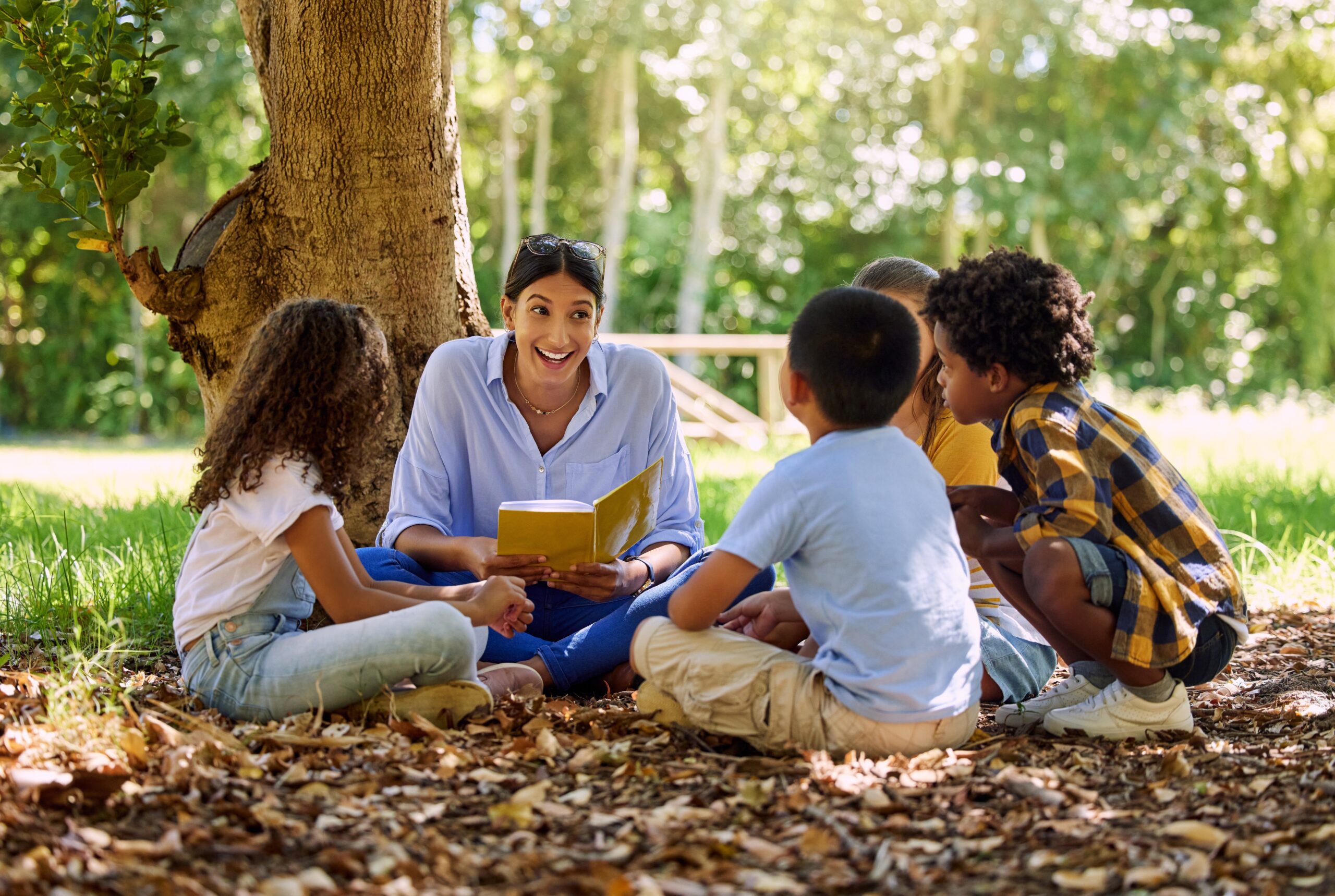

Books are a perfect opportunity to introduce your child to environmental topics. Want to ensure the eco-reading time with your child is impactful? Here are some tips to enhance your child’s reading comprehension:
- If the weather allows, read together outside! There’s nothing like learning about nature in nature. Bring a towel or blanket to your nearest park, pack a couple of reusable water bottles, maybe some bug spray and fit in some literary family time.
- Cater toward the environmental topics your child is most interested in, but remember to explore different concepts to ensure a well-rounded understanding.
- Demonstrate problem-solving skills by asking your child questions about the environmental questions discussed in their books. Some questions include:
- What environmental issues did the main character(s) face?
- What did they do to work through that issue?
- What would you do if you faced this challenge? How could you apply these lessons to your life, whether at school, at home, or around the neighborhood?
- Try asking your child cause and effect questions, such as:
- When it rains, where does the water go?
- What happens to a forest when the trees are cut?
- Build on these conversations by emphasizing that small actions can make a big difference. Turning off lights and devices when they’re not in use, not letting the sink run during hand-washing or tooth-brushing time, and utilizing a family compost bin are all simple, yet impactful, options.
- Remember to remind your kiddo that environmental actions can be fun, too!
- Encourage them to repurpose empty containers for their art projects, or ditch the family car for a group bike ride or stroll to nearby destinations.
What to Read, What to Read…
If you’re having difficulty talking about these complex issues with your child, pick up a book and let it do the talking! We have a few suggestions below for a variety of age groups. Check out your local library for these and other titles:
We are the Water Protectors – This Caldecott Medal-winning book pairs Carole Lindstrom’s words with Michaela Goade’s beautiful, watercolor-style illustrations. Lindstrom is Anishinaabe/Métis and Ojibwe, and Goade is a member of the Tlingit and Haida Tribes; both artists foreground Indigenous advocacy in their work. Together, they’ve crafted a powerful book about the importance of protecting our planet’s waterways, inspiring young readers toward lifetimes of stewardship.
Autumn Peltier, Water Warrior – Also written by Carole Lindstrom (with illustrations by Bridget George), this companion book to We Are the Water Protectors focuses on the intertwined stories of two real-life water protectors: Autumn Peltier, a young, contemporary advocate for water protection and Indigenous rights, and her great-aunt Josephine Mandamin, one of the very first members of the water protector movement. This is a great introduction to a vital piece of
Gracie Under the Waves by Linda Sue Park – Aimed toward elementary schoolers, this Blueberry Honor Award-winning book introduces young readers to the idea of protecting our oceans’ reefs.
Haven Jacobs Saves the Planet by Barbara Dee – Perfect for tweens and young teens, this YA book follows twelve-year-old Haven Jacobs, an ordinary girl whose trip to a local polluted river leads her to a journey of discovery of both harrowing truths and of her own ability to make an impact. The publisher also offers a bevy of discussion questions and extension activities that young people can use to explore the themes of the book and apply Haven’s motivation toward climate justice to their own lives.
Down Came the Rain by Jennifer Matthieu – This young adult novel tells the story of Eliza and Javi, two teenagers who have both experienced different versions of climate-related trauma. It’s a tale of both environmental activism and first love.
Onward: Climate Fiction to Inspire Hope, ed. Nora Shalaway Carter – A collection that ranges from the speculative and dystopian to the firmly realistic, these sixteen short stories have something for every climate-aware teen. Eco-focused young adults are sure to be inspired by this book, which also features a section full of practical steps that young people can take to make a difference in the world.
Do you have a favorite “green” book you like to share with your children? We’d love to hear from you at lastormwater@lacity.org.