


Each year, Los Angeles waits for its first major rainfall. Though smaller storms and showers can hit throughout the year, the “first flush” is the rainfall that really gets things going and triggers SoCal’s rainy season. The first flush sweeps away any trash, automotive fluids, dog waste, or other pollutants lingering on our streets, gutters, and sidewalks. All the toxins that have been accumulating throughout the dry season are now primed for a raindrop-fueled journey through LA’s waterways to the Pacific Ocean.
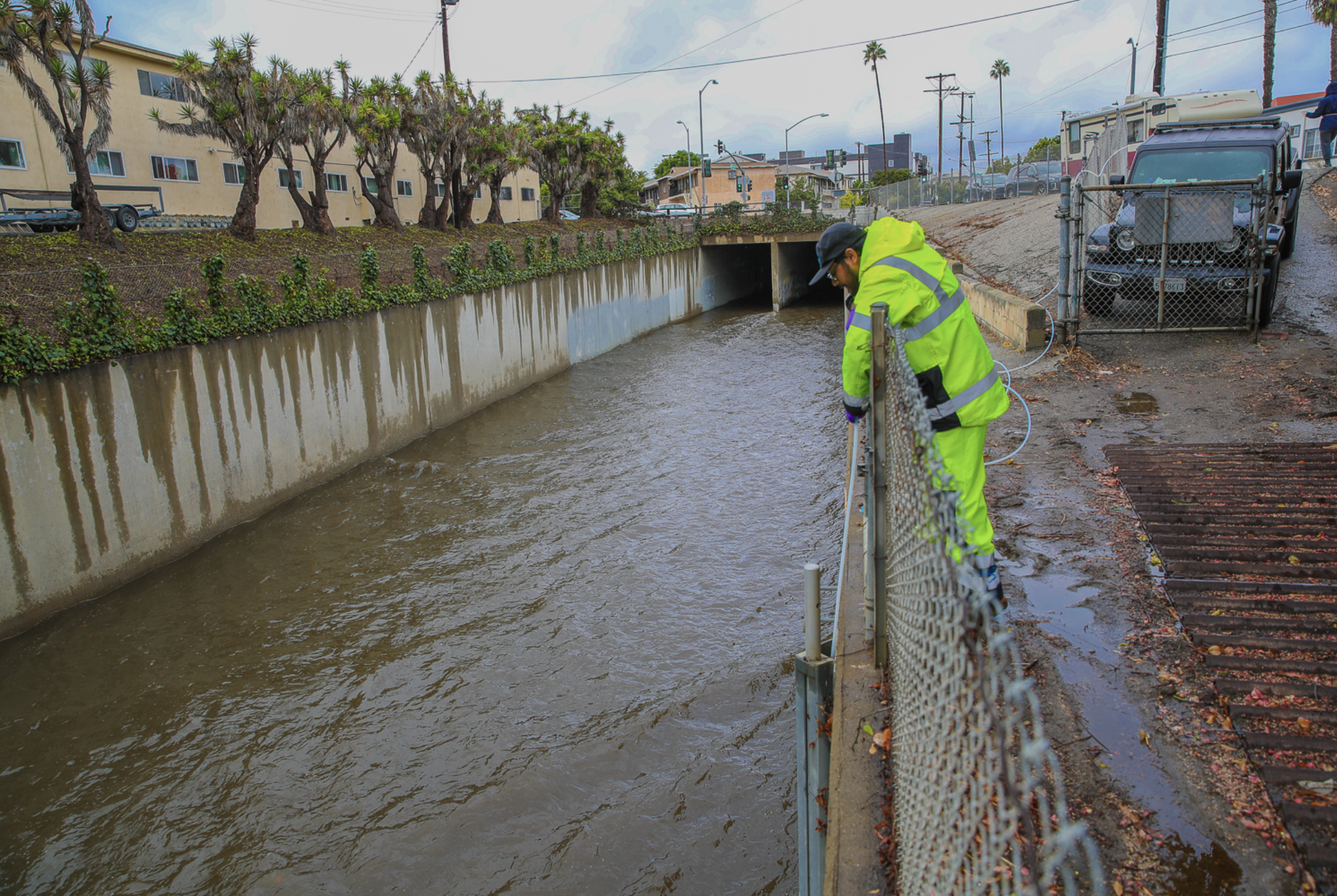
This year, LA’s first flush happened in mid-October with an early season storm bringing 1.41 inches of rain to Downtown LA, 1.65 inches to the San Fernando Valley and 2.05 inches to Eagle Rock. And, while news of the rainy season’s approach gets most Angelenos digging for our umbrellas, refreshing our weather apps and staying indoors, LA Sanitation and Environment’s (LASAN) Watershed Protection Program’s Storm Coordination Team head out into the storm!
Thanks to these often-unseen heroes collecting and then analyzing stormwater samples, we’re able to have a better understanding of the pollution levels in our waterways. Their work helps keep our city safe and healthy, while we focus on staying dry. LASAN’s Storm Coordinator Clifford Shum offered us a closer look into the work his team does, which is something we can all be grateful for this fall.
Are You ‘Fraid of the First Flush?
The first flush is the rainy season’s first significant rainfall. Though it typically arrives in November or December, these are not hard-and-fast dates. This year it arrived in mid-October. Last rainy season, LA’s first flush didn’t come until mid-January, following the devastating Palisades and Eaton Fires.
Whenever the first flush comes to town, that first inch or so of runoff acts like a rinse cycle for the entire city, carrying months of accumulated pollutants. From motor oil, litter, and metals to pesticides, fertilizers, and pet waste, these toxins are then swept away into our local creeks, rivers and lakes and ultimately find they way through our waterways to the Pacific Ocean.
As the start of the rainy season, the first flush is one of the most significant times of year for LASAN’s Storm Coordination Team, who collectively leap into action to gather and analyze dozens of stormwater samples across Los Angeles’ four major watersheds: Upper Los Angeles River, Ballona Creek, Dominguez Channel, and Santa Monica Bay (J2–J3).
Storms and Science
Weather always has a level of unpredictability; even the best forecasters can never be certain at exactly which moment a storm will arrive. “Every storm event brings with it a new set of challenges or issues,” Clifford noted in our 2023 interview with him. “I jokingly tell my friends and family that as LASAN’s Storm Coordinator, I feel like I’m planning a wedding, but I never know when the bride and groom will arrive.”
That uncertainty means his team are effectively on standby when storms are on the horizon. They’re looking for two things in the forecast: a 70% chance of rain and an estimation that this precipitation will yield around ¼ inch to ½ inch of water. Once the call is made, the team quickly mobilizes to collect water samples from more than 40 different locations citywide. Because whenever the “first flush” storm comes to town, LASAN’s Storm Coordination Team must collect samples to ensure compliance with the mandates of the City’s National Pollutant Discharge Elimination System (or NPDES) Municipal Stormwater Permit, and time is of the essence..
At each site, staff collect multiple runoff samples to paint a complete picture of what’s flowing through our storm drains. Using a mix of automated samplers and handheld tools, these teams collect hundreds of liters of water for lab analysis.
All told, it’s a $3 million monitoring program, which operates during both the wet and dry seasons.
What Comes Next
Once the storm passes, all those samples make their way to labs like the one found at LA’s Hyperion Water Reclamation Plant, where they’re analyzed for pollutants such as bacteria, fecal matter, metals, pesticides, and nutrients. The resulting data helps LASAN track trends, improve water quality, and alert residents to unsafe conditions (read: too much bacteria flowing into the ocean means the closure of beaches). All in all, this information helps us get a better view of our city’s pollution and rainfall levels, which can then better inform the next generation of stormwater projects.
Though Clifford’s team and their efforts might not be household names, we think they deserve a round of applause. The work they do is crucial for protecting LA’s waterways, and by extension, the health of everyone and everything that depends on them. We’re all part of this watery ecosystem, after all.