

Though many may flock to New England’s covered bridges this time of year, we think that LA’s homegrown bridges are pretty spectacular, too. November is Historic Bridge Awareness Month, making this the perfect time to reflect on these architectural marvels. Bridges can be visually striking, but they also serve a vital purpose beyond their looks: they help us cross over busy roads, unstable terrain, and waterways. A world without sturdy bridges and solid infrastructure can be devastating, as Angelenos of the past learned first-hand during the Great Flood of 1938.
The Great Deluge
In late February and early March of 1938, a five-day storm of non-stop rain relentlessly unleashed a devastating flood across the Los Angeles Basin. The torrential downpour overwhelmed our region’s valleys and river channels, to the point that typically tranquil streams became swollen and flooded. Some of the worst damage was incurred following the collapse of bridges on Lankershim Boulevard near Universal City, in Long Beach, and in Anaheim.
Near Griffith Park, the LA River flowed over its banks, destroying some buildings on the Warner Bros. studio lot. It wasn’t an uncommon sight to view complete houses being dragged through the flooded streets. An article from PBS SoCal rightly describes the events as “apocalyptic”. Blackouts isolated the region, while a gas main ruptured beneath the river, making it look like the river was aflame. Two alligators even seized the opportunity to escape from the local alligator farm.
Prior to the early 20th century, flooding along the LA River was not unheard of, but during Indigenous times, local tribes understood the river’s vicissitudes and found a way to live in a kind of harmony with it. But by the 1930s, with buildings erected firmly in the flood zone, there was minimal infrastructure in place to withstand a flood of this size—the bridges and river banks simply couldn’t take it.
To prevent another disaster of this magnitude, a new plan was put in place to channelize the river, giving us the urban waterway we all know today. You can learn more about our river and its history from the LA River Master Plan, including details about other floods later in the 20th century.
Bridges Around Town
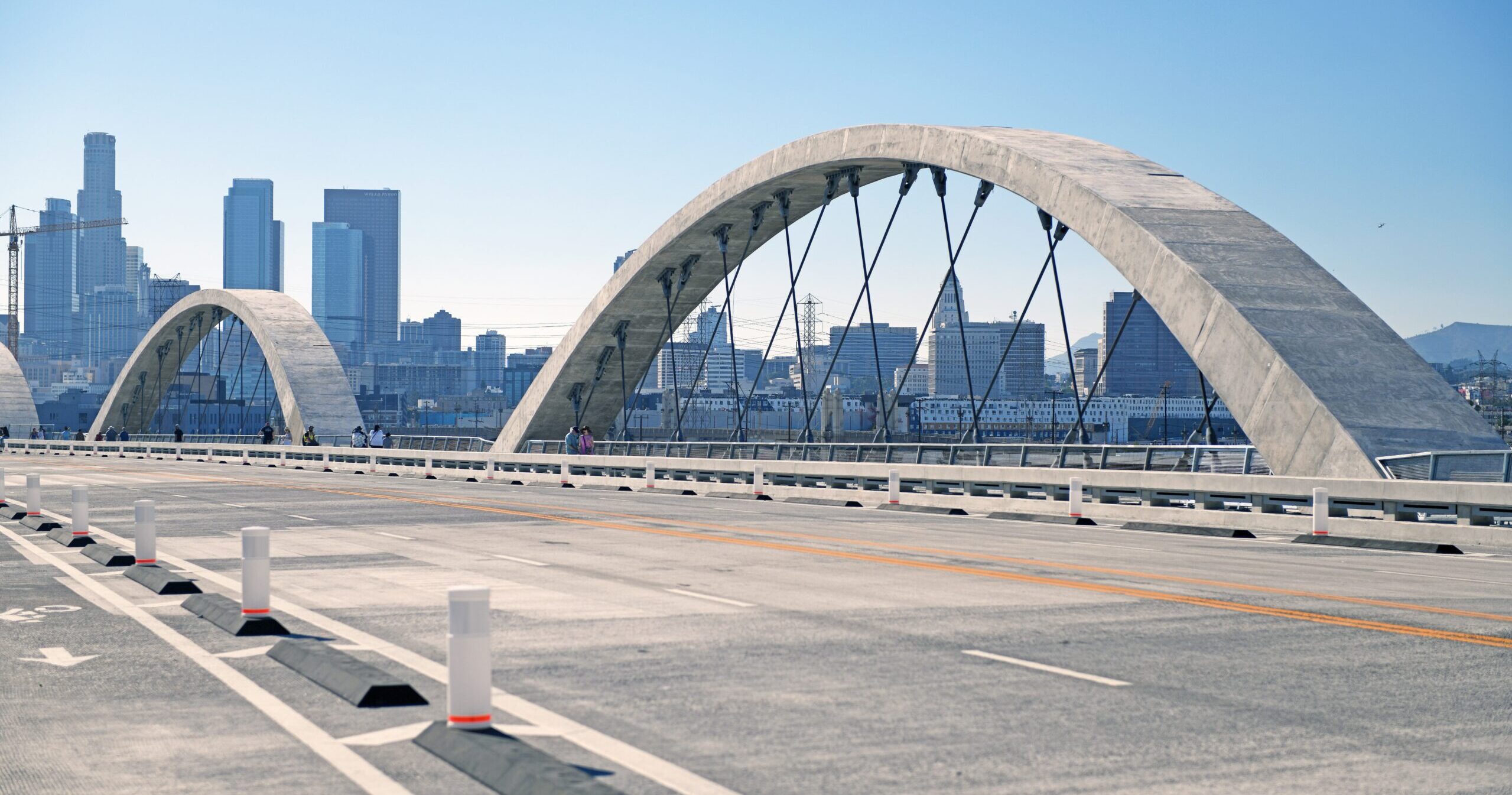
Today, Los Angeles’ bridges combine form and function, ensuring that we have safe, stylish options for getting around different parts of our city. The elegant 6th Street Viaduct Bridge, completed in 2022, serves as an update to its deteriorating 1932 predecessor. This bridge’s eye-catching arches have hints of early 20th-century style, while its pedestrian walkways and bike lanes reflect our ever-evolving relationship with urban mobility. When the updated bridge first opened, there was even a period where it was open only to pedestrians and cyclists!
Elsewhere along the LA River, near Atwater, the La Kretz Crossing bridge features cables uplifting a striking steel structure that points into the sky.
The Vincent Thomas Bridge remains a proud gateway to the Port of Los Angeles, carrying goods and travelers alike above the busy harbor. Plus, it’s the only suspension bridge within LA’s limits.
In Venice, the Lighthouse Street Bridge crosses Ballona Creek, giving pedestrians a lovely perch from which to view the creek’s resident egrets. And Venice’s famed man-made canals also feature picturesque white bridges, beloved by locals and tourists alike.
The Gothic-style Shakespeare Bridge, nestled in the Franklin Hills, continues to charm residents nearly a century after it was first built (and its post-Northridge Earthquake retrofit means that it’s just as safe as it is adorable.)
These bridges are proof that infrastructure can have personality and purpose, helping us get around the city while adding even more character to our vistas.
Bridging Past and Present
We still live with the effects of the Great Flood of 1938. Our concrete-channelized rivers and creeks are the most apparent example, but there are other, more subtle ways the flood impacts our lives. It demonstrated the immense power of the river that flows through our region, the strength and unpredictability of rainwater, the importance of robust infrastructural planning, and the need to anticipate potential problems ahead of time. The Great Flood also reminds us of how interconnected our lives are with the natural world. Because even wrapped in concrete, the Los Angeles River is still a vital artery leading straight to the Pacific Ocean that supports a thriving plant and animal ecosystem (including the thousands of Angelenos who walk, bike, and live along its banks.) Protecting the river from pollutants is one small way we can attempt to live in harmony with our waterways.
Do you have a favorite LA bridge? Did we miss any? Send us an email at lastormwater@lacity.org and share your favorite with us.