


Our favorite super-sized, mid-winter event is just around the corner. No, not the Super Bowl – the Whale Fiesta at Cabrillo Marine Aquarium!
Scheduled this year for Sunday, February 1, 2026, the Whale Fiesta is an annual celebration of the Pacific gray whale’s migration. This kick-off to whale-watching season promises to be filled with everything from puppet shows and games to informative guest lectures.
The art of spending a day on a boat looking out for grays, humpbacks, and other cetaceans really started to take off in Southern California in the middle of the 20th Century. John Olguin, the second-ever museum director of the Cabrillo Marine Museum, is known as the “father of recreational whale watching.” He discovered the perfect use for off-season fishing boats: bringing groups of community members off-shore for educational tours of whales’ habitats. Because nothing makes a budding aquatic advocate more excited to learn more about life in our waterways than the joy of watching a gigantic tail whip out of the waves!
Though the place where whale watching got its start is now called the Cabrillo Marine Aquarium, the San Pedro institution still facilitates whale watching, along with a boatload of other marine educational activities. But while it’s comforting to know that some things have stood the test of time, it’s impossible to talk about whales without confronting the ways that their lives and habitats have changed in recent decades due to climate change and other forms of human intervention.
Recent changes to the oceanographic conditions off our coast have led to unpredictable variations in the habits of whales who swim near SoCal. “The Blob,” first detected in 2013, is a marine heatwave – that is, a mass of strangely warm water in the Pacific Ocean. The Blob led to a number of tropical whale species coming up to our shores – much farther north than usual – thus shifting the overall ecosystem. Similarly strangely, in Fall 2011, over 100 blue whales were spotted in Santa Monica Bay, which is a much higher number than is typically seen. These odd occurrences indicate the potential for ongoing shifts in the whale populations in our corner of the Pacific.
But these recent decades have been like the waves of the ocean itself: there have been ups amid the downs. For centuries, the whaling industry decimated the animals’ populations, with gray whales nearly going extinct…until the Mammal Protection Act (1972) and Endangered Species Act (1973) helped boost their numbers up to pre-whaling estimates. And though global warming and the influx of man-made plastics into the ocean are both drastically dangerous for our finned friends, the continuing work of naturalists like the folks at Cabrillo means that there will always be hope for these titans of the sea.
If you can’t make it out for the Whale Fiesta, try to catch a ride on a whale watching tour in 2026. You’ll be able to catch a glimpse of the gray whales’ northward migration throughout February and into March. Humpback whales are commonly seen off our coast when they pass by during their spring and fall migrations, and some blue whales can be spotted in the summer.
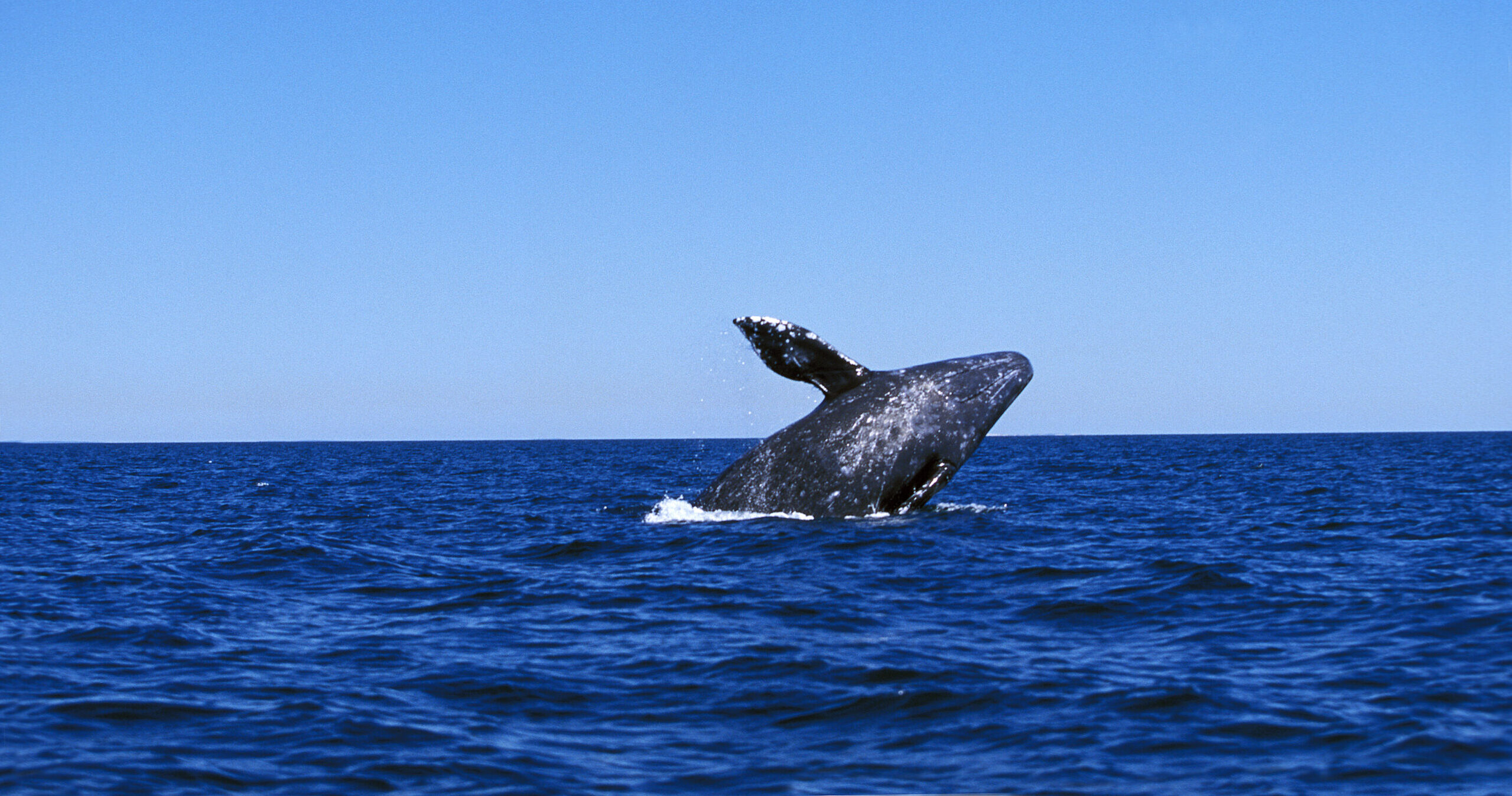
While you’re out whale watching, keep your eyes peeled for some of these remarkable creatures’ fascinating antics. What may look to us like whales “waving hello” to us, is actually a pectoral slap. This is how whales get a bit of exercise – kind of like when a desk-bound human stands up for a mid-day stretch break, only on a much larger scale. And when whales come up to the surface to breach, they’re really just getting a nice breath of fresh air. But a deep breath looks a lot more dramatic when it’s being done by a creature that weighs forty tons!
Remember to always be sure to follow best practices when visiting with our whale friends. Admire them at a safe distance without interrupting their migration. And throughout the year, you can do your part to help keep plastics and other trash out of their watery abodes.
Have any great photos or stories from your own whale watching adventures? Share them with us at lastormwater@lacity.org.