



April showers bring May flowers. As we set our sights on May, the streets of LA are looking pretty spectacular. From decades-old transplants to even-older natives, LA is filled with colorful blooms this time of year. Even in the middle of the city, nature can’t help but shine, and taking the time to appreciate the pockets of the natural world right under our noses can inspire us to dedicate ourselves further to protecting the environment as a whole.
We’ve gathered you a bouquet of local flower facts, plus a slideshow of some local blooms. Stop and smell the roses (and magnolias, and poppies…) with us!
California Poppy / Golden Poppy
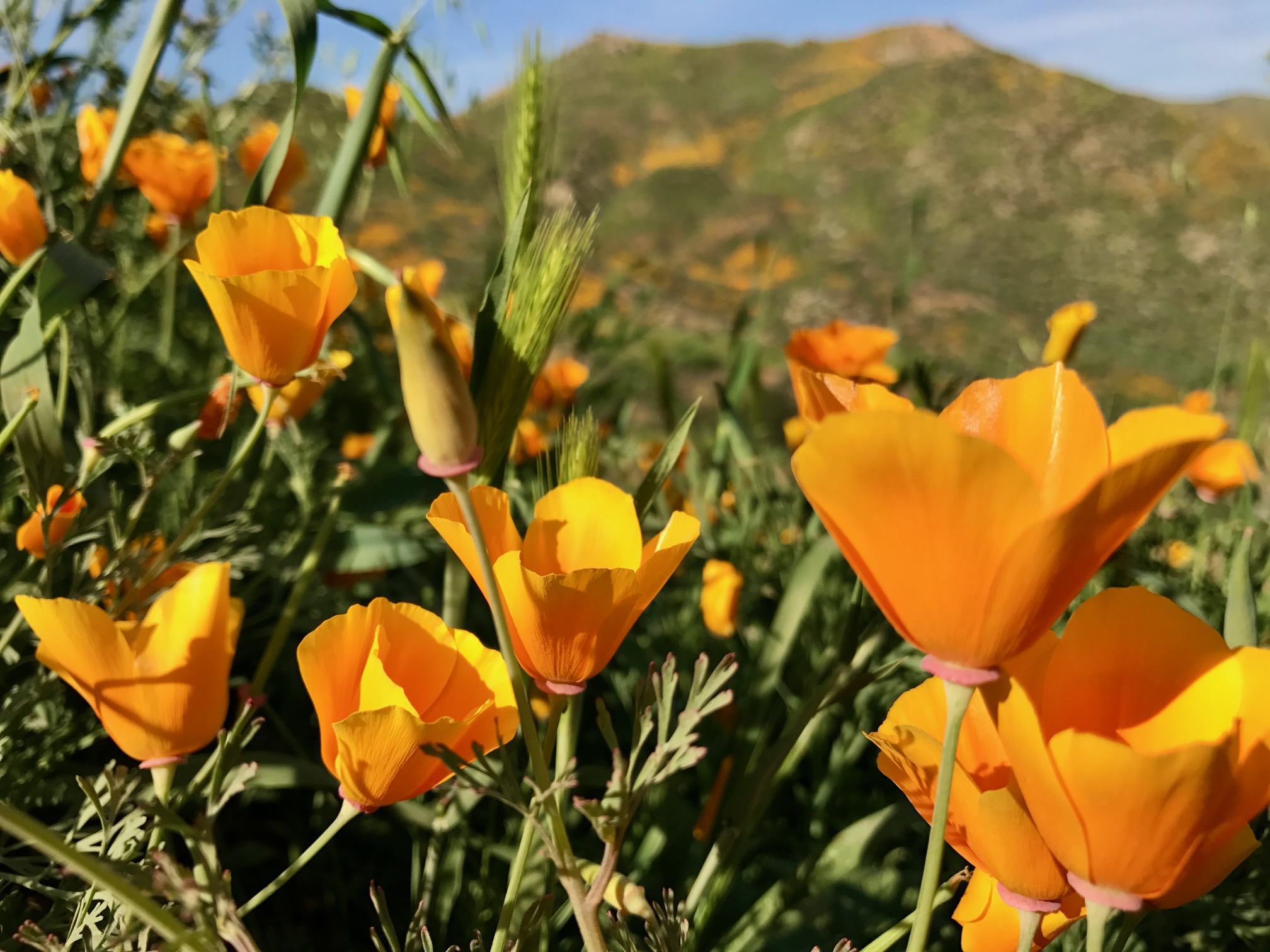
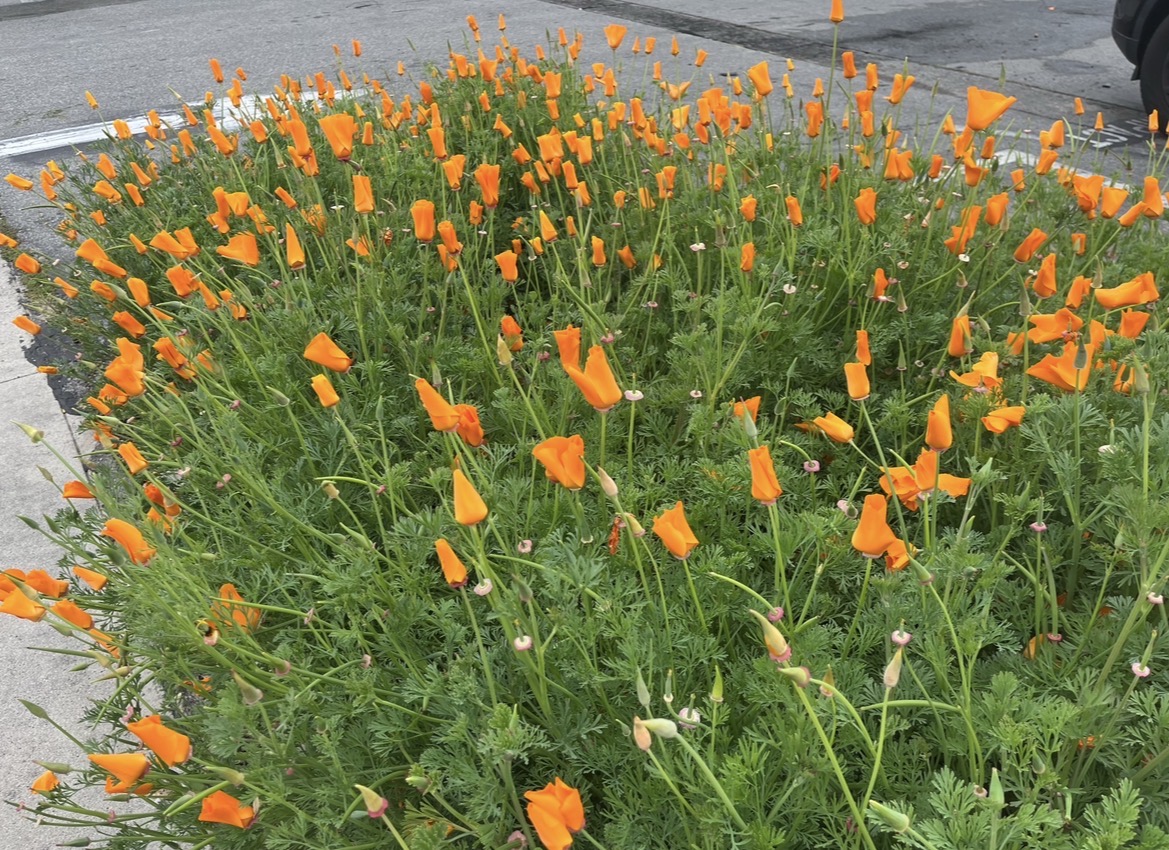
Poppies are a local favorite, and for good reason: the gorgeous golden poppy is California’s state flower and it’s a native plant. While it’s something of an urban legend that it’s illegal to pick any of these bright little blooms (you can pick California poppies that grow in your yard, though not necessarily in public spaces; learn more at the link here), one Californian tradition that holds fast is the making of a sojourn to the annual superbloom in the fields of Antelope Valley.
Even if you couldn’t make it out to the Antelope Valley Poppy Reserve this year, you’ll certainly be able to see California poppies sprouting up everywhere from parking lots to your street’s median.
Let’s leave the last word on poppies with John Steinbeck, who wrote about the flowers in his Californian epic East of Eden: “These too are of a burning color – not orange, not gold, but if pure gold were liquid and could raise a cream, that golden cream might be like the color of the poppies.”
Jacaranda
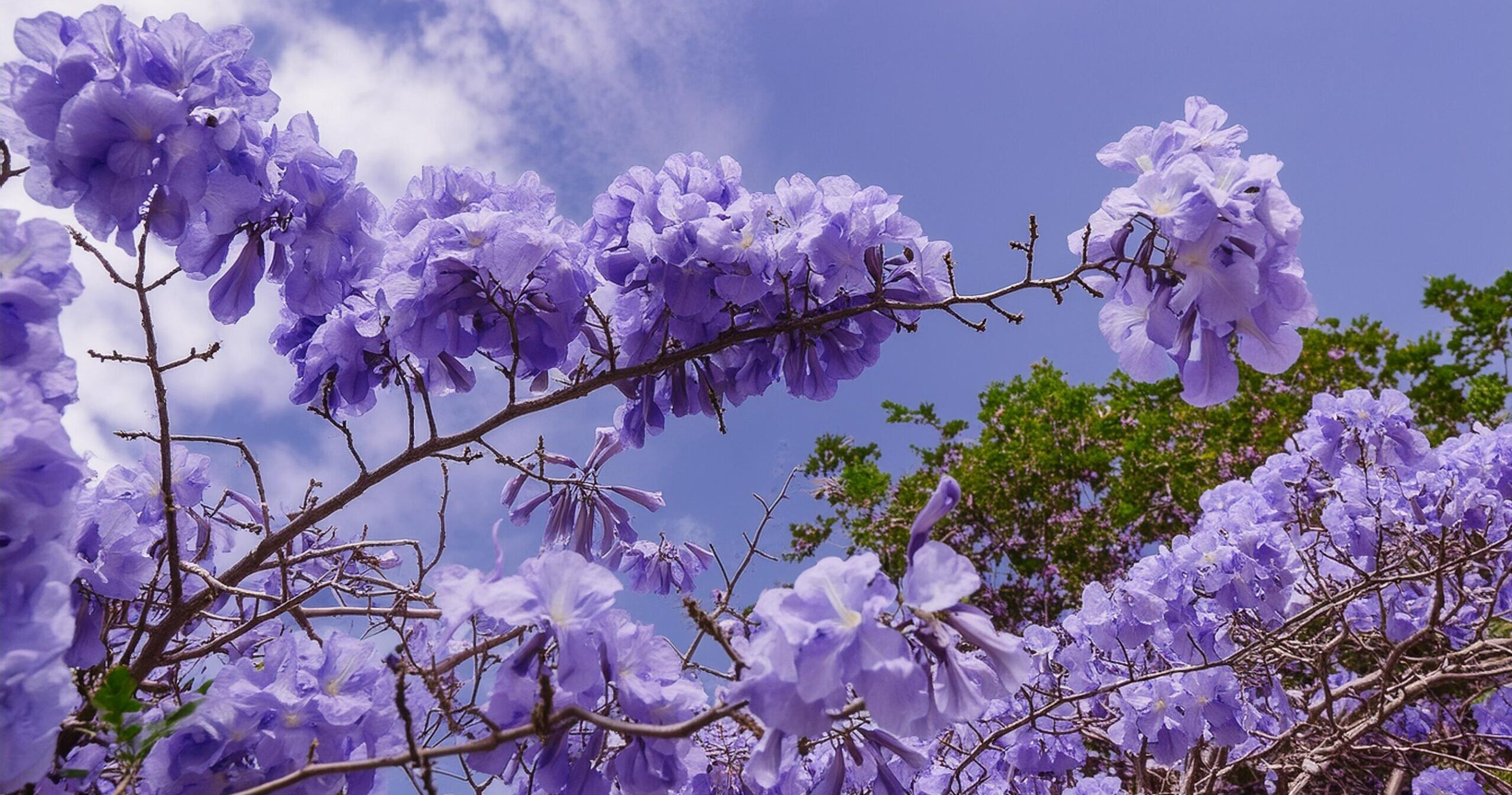
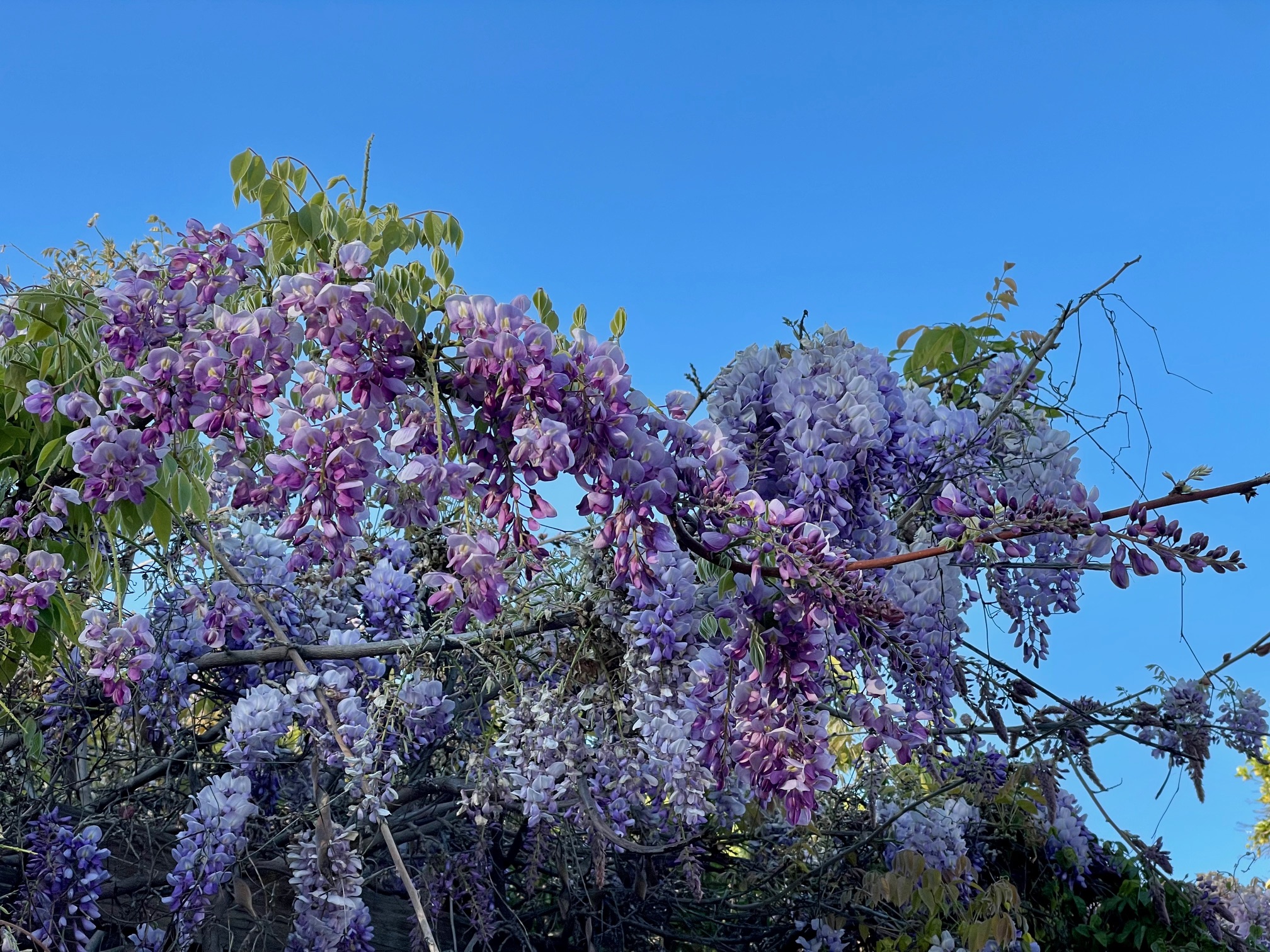
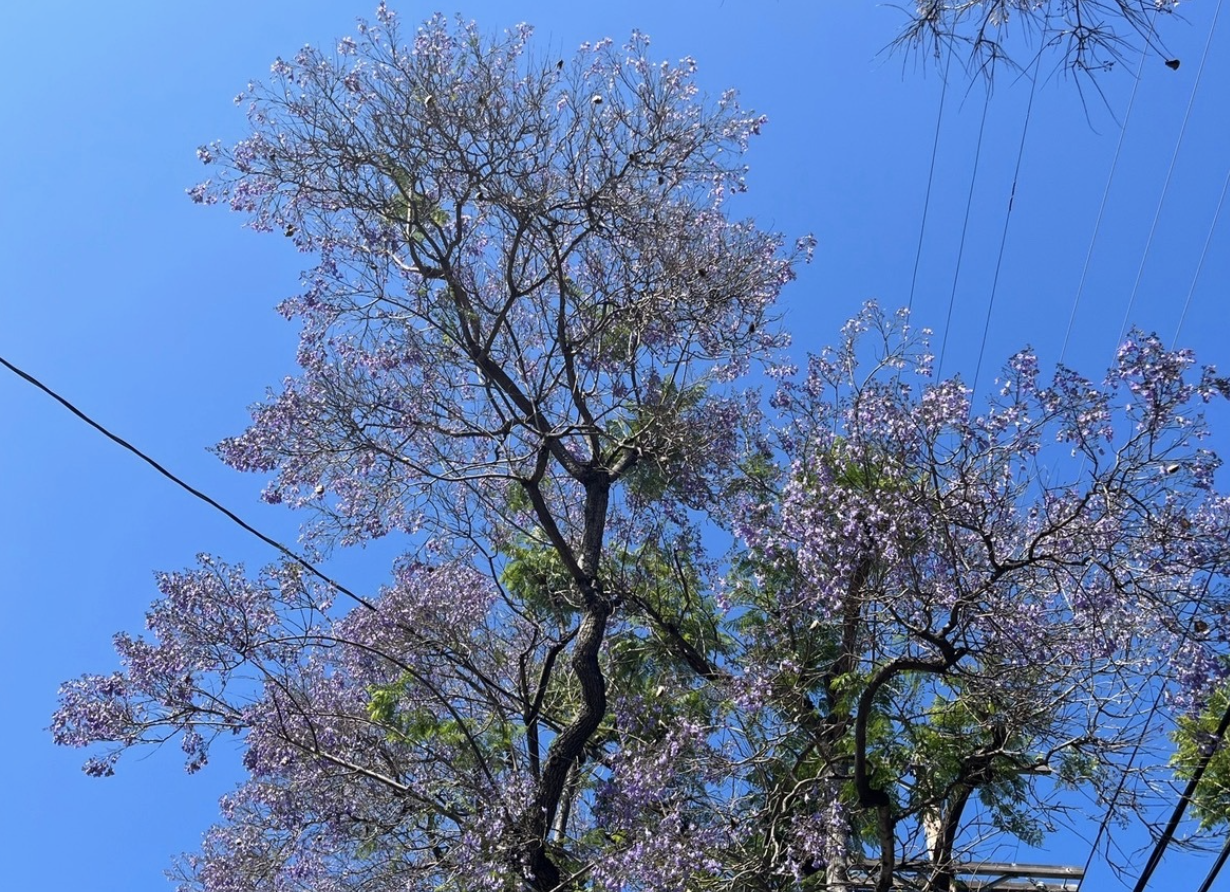
These canopies of bluish-purple spanning across entire city blocks and daintily dropping their petals on parked cars are one of the surefire signs that spring has come to the Southland. Originally hailing from Brazil, the name jacaranda derives from a Tupi-Guarani term, either y-acā-ratā (“heartwood”) or ya’kāg rā’ta (“hard-headed.”)
LA Public Library notes that, while we’re not certain exactly how these gorgeous trees made their way to Southern California, we know that they were popularized by horticulturist Kate Sessions during her establishment of a commercial nursery in San Diego in 1892. (Learn more at the link here.)
Despite the beauty of a street lined in jacarandas, the history of planting non-native trees in LA has been a contentious and often ecologically destructive one. We can always redirect some of our attention toward similarly-colored native plant, such as the…
Lupine
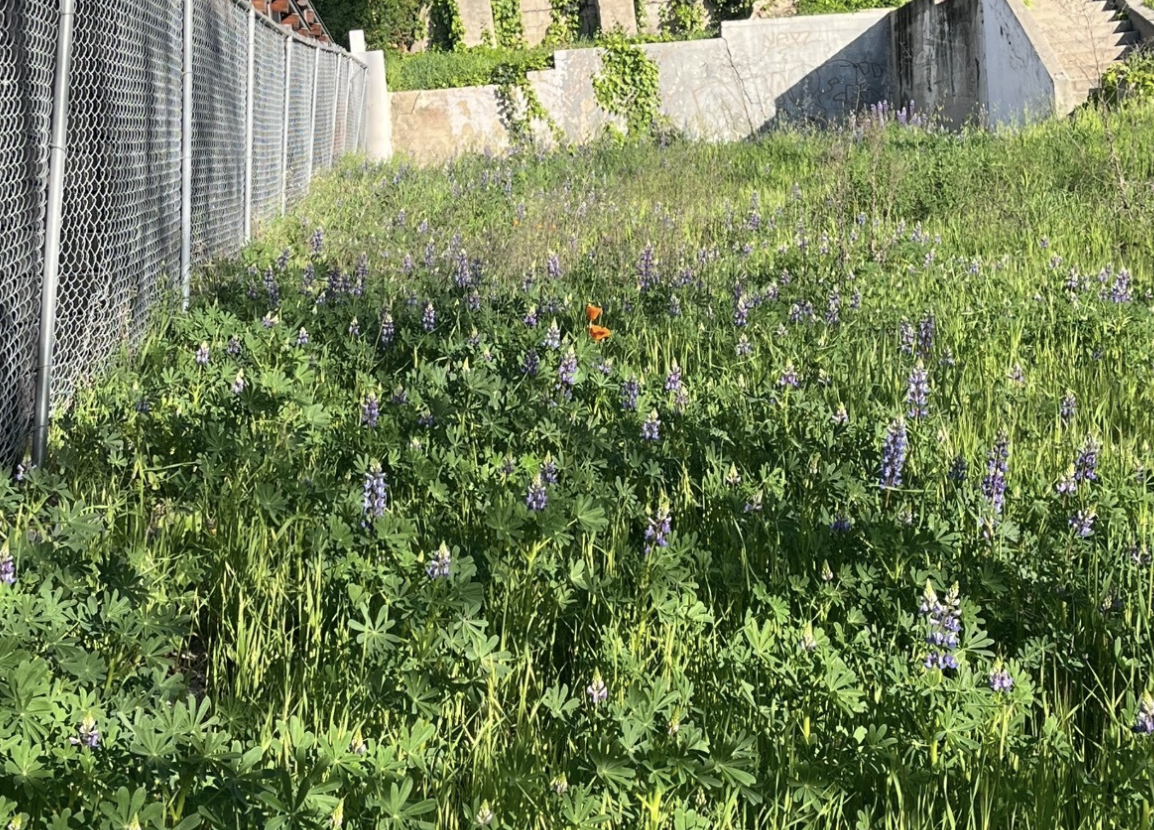
Numerous types of lupine are endemic to California (for more details, visit Calscapes’ page on native plants at the link here), with fourteen varieties blanketing the Santa Monica Mountains. Blooming from late winter to mid-summer, lupine can be seen as a metaphor for resilience in a wildfire-prone region: nettle lupine and dove lupine both commonly grow in recently burned areas.
Some people of the past once erroneously believed that the lupine leeches nutrients from the soil, so they gave it the Latin name Lupinus, or “wolf.” But the lupine is not a predator at all – this plant actually adds nitrogen into your soil, making it a helpful native to introduce to nutrient-poor soil (learn more at the Santa Monica Mountains Trails Council’s site here.)
Magnolia
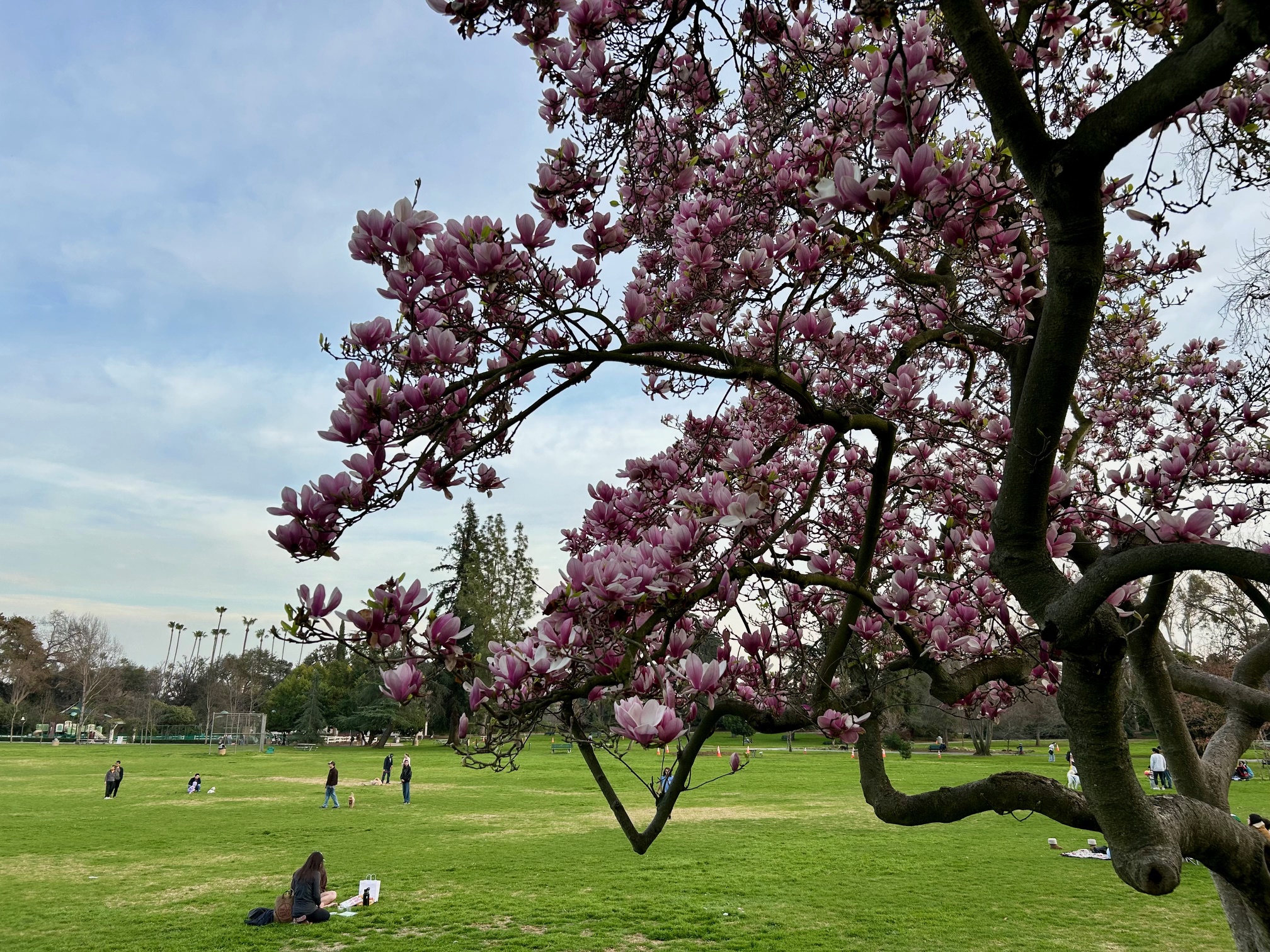
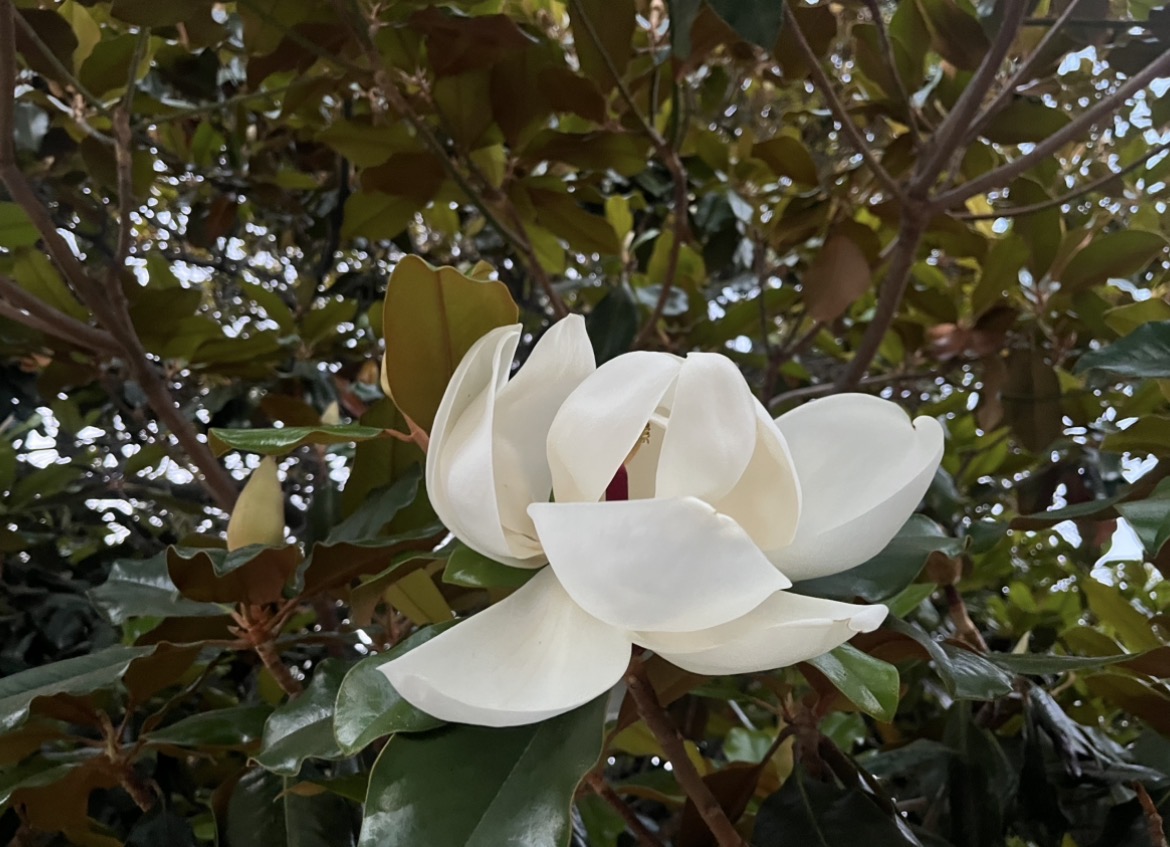
Though not native to California, magnolia trees have become so quintessential to LA that they’ve even lent their name to one of the San Fernando Valley’s major thoroughfares! Watching a magnolia tree’s flower open up from a pinkish bud into a ballerina-esque blossom may be transfixing, but what’s even more astounding is that magnolias have been around since the Cretaceous period!
These ancient blooms have one more trick up their sleeves (petals?): many magnolia subspecies are edible. Though we don’t recommend taking a bite from just any old tree that you might come across in the city (unless you’re an expert urban forager!), magnolia flowers have long been consumed as a tea, pickle, or fresh, floral snack. (Learn more about magnolias from the Smithsonian at the link here.)
We’d love to see your pictures of your part of LA in bloom! Send us your flowery photographs at lastormwater@lacity.org.