


While our official rainy season wrapped up on April 15, Mother Nature doesn’t always get the memo. There’s always a chance for spring showers and with an El Niño forecasted for the upcoming 2026–27 rainy season, there’s no better time than right now to make sure your rain barrel is prepped and ready to do its job.
All this talk of rain may remind you of a piece of news that surfaced earlier this year: as of January 2026, California is no longer officially in a drought. But don’t take this as a greenlight to suddenly ditch water conservation; it’s actually quite the opposite. This news should serve to remind us to continue to treasure our state’s water as the precious resource it is. And harvesting rainwater is one of the smartest, simplest things you can do to be water-wise. It’s great for your garden and for your water bill, too!
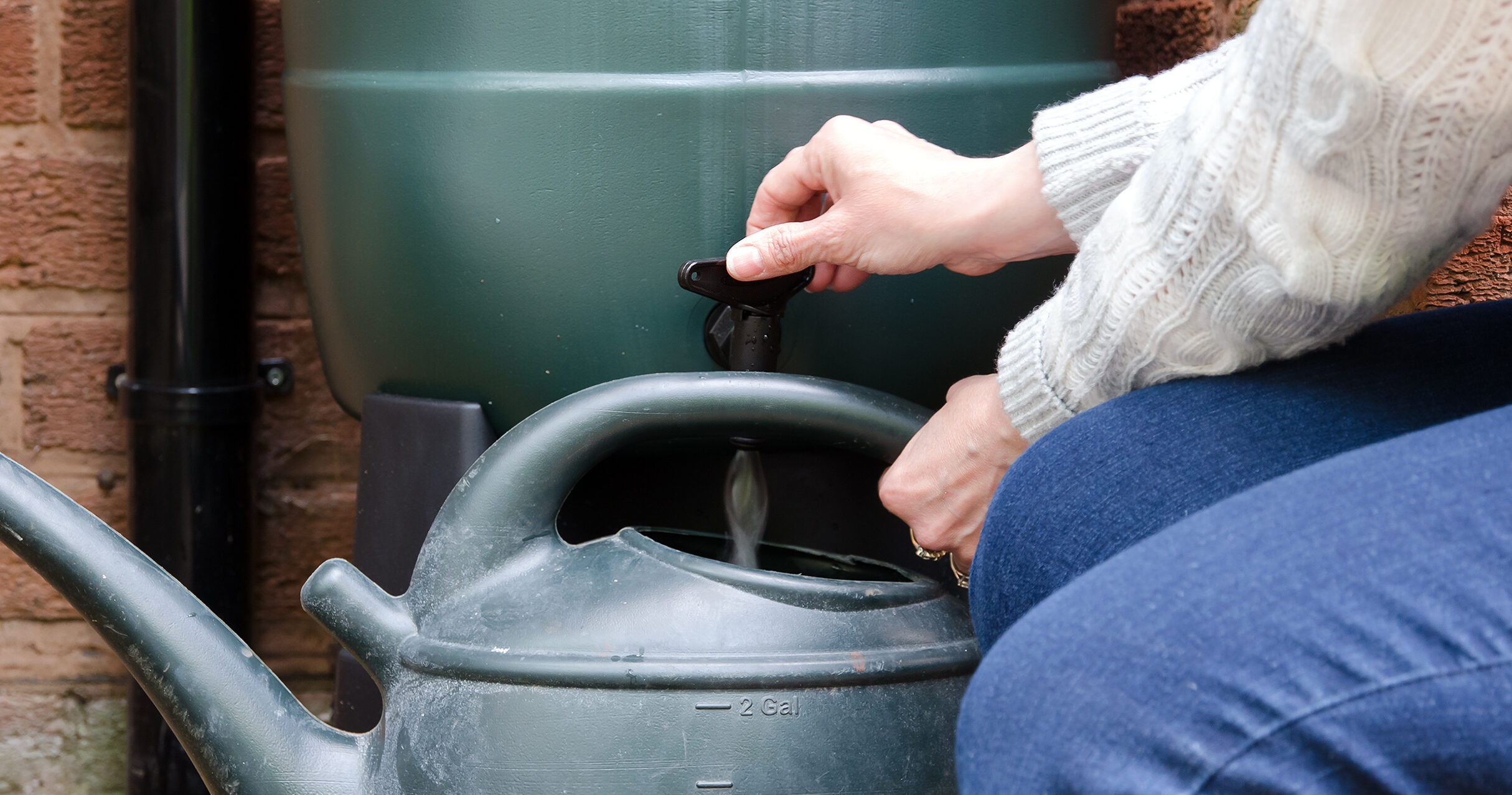
How do rain barrels work, you may ask? Rain barrels collect runoff from your home’s roof for later use on lawns, gardens, and indoor plants, meaning every drop that falls on your house can be saved to nourish your chlorophyll-loving cuties. So let’s make sure you’re ready to catch it all!
Rain Barrel Rebates: Even for homeowners who value the benefits of setting up a rain barrel, the up-front costs of installation may still feel a little daunting. Luckily, The Metropolitan Water District of Southern California offers rebates for rain barrels and cisterns through their SoCalWaterSmart program. Residents can submit a rebate claim of $35 per rain barrel (for up to two barrels); a rebate for installing one cistern can range from $250-$350, depending on the size. Learn more about how to qualify for a rebate at the link here.
Here are four easy tips to get your rain barrel RAIN-ready:
R – REMOVE debris from your gutters and downspouts.
Clogged gutters mean water can’t flow freely into your barrel. Pros recommend a good clean-out twice a year: once in the spring, once in the fall. Since we’re right in that window, now’s a great time to grab a ladder and take a look.
A – ACCUMULATE more water by connecting multiple barrels.
One barrel filling up fast? Link a second (or third!) to maximize your collection. And before that rain hits, make sure your overflow valve at the top of the barrel is open and ready to go.
I – INSPECT for cracks, leaks, and unwanted guests.
Give your barrel and spigot a once-over for any cracks. To keep mosquitoes out, make sure all openings are tightly sealed with 16-gauge screening. Collected rainwater is fantastic for watering your yard and garden. But remember: never drink it! This final piece of advice goes for humans and animal companions alike.
N – NOTE how clean your barrel is and rinse if needed.
A quick rinse with water usually does the trick. For a barrel that’s seen better days, add two teaspoons of biodegradable soap and two teaspoons of vinegar before rinsing. A little eco-friendly scrub goes a long way.
Whether the clouds roll in this weekend or later this season, a well-maintained rain barrel means you’ll be ready.
Want to go deeper? Check out LA Sanitation and Environment’s Rainwater Harvesting web pages. You can visit the link here. At the bottom of the page, you’ll find links to LASAN’s free rain barrel maintenance webinars. And if you have any questions, email us at lastormwater@lacity.org.