


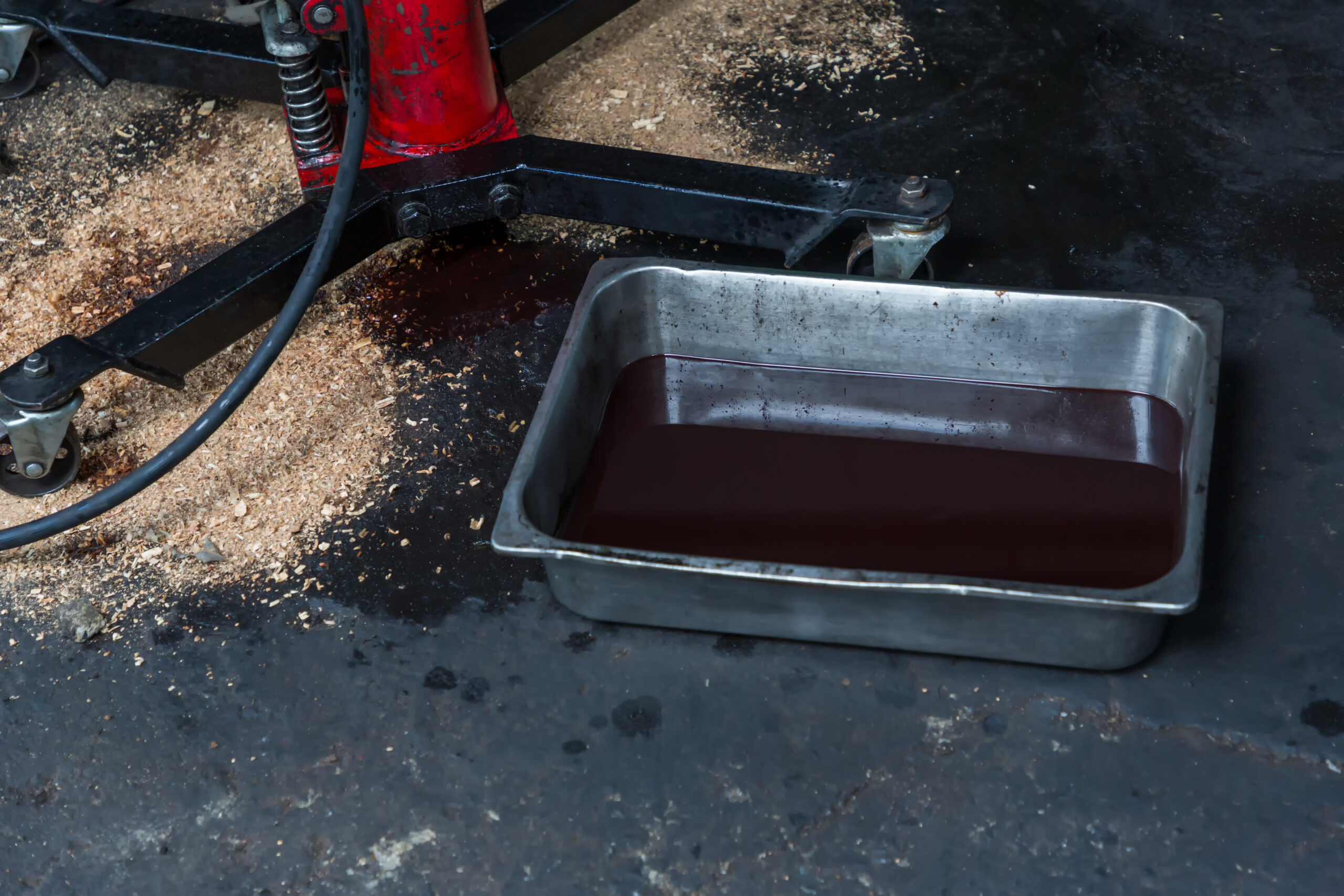

It’s something many, if not most, drivers have experienced: you slip out of your driveway or parking space only to discover you left behind spots of slick, shiny motor oil. That greasy, discolored spot isn’t pretty to look at and it means your engine needs some TLC. But it’s also an environmental hazard: should a surprise rain shower, errant sprinkler, or forgetful hose-wielder rinse that oil toward the street, it’ll be on a direct path toward our city’s storm drains – and those lead to the river, creeks, and the ocean. A frightening fact: a single gallon of motor oil can contaminate a million gallons of water.
But there’s no need to cry over spilled oil! We’ve got a simple, step-by-step guide to cleaning up oil spills the eco-smart way:
- Get on those gloves: When dealing with any form of household hazardous waste, it’s a good idea to wear latex or rubber gloves (and depending on the magnitude of the spill, you might also need foot coverings to protect your shoes.) Motor oil is particularly infamous when it comes to staining clothes, skin, and pretty much anything it touches.
- Hose is a no-go: Don’t even think of uncoiling your yard hose – or filling up your gardening pail, for that matter. While water has a myriad of life-affirming uses, cleaning up oil spills is not one of them. Rinsing off oil in your driveway or parking spot will carry those chemicals to our storm drains; it’s a key source of stormwater pollution. Instead, you’ll want to opt for something absorbent. Something like…
- Kitty litter, sawdust, and baking soda, oh my! Though it may sound paws-itively quirky, the best option for cleaning up a motor oil spill is cat litter. It’s super-absorbent and can easily soak up oil spills off of concrete. Just sprinkle a thin layer of litter on top of the wet oil spill, leave it to sit for a few days, and then brush it into a heavy-duty, sealable bag. You can repeat this process until the spill’s stain is completely gone. If you have access to sawdust, that’s another great option, and baking soda can work in a pinch.
- Bring that bag to your local S.A.F.E. (Solvents/Automotive/Flammables/Electronics) Collection Center: Now that you have a durable, sealed bag full of oil-soaked kitty litter (or sawdust or baking soda), your next stop is your nearest S.A.F.E. Center. The staff will then help take care of all the proper handling and safe disposal. When hazardous waste is illegally/improperly disposed of, its chemicals can be released into the environment, contaminating our air, water, and food. (Not to mention the fact that certain hazardous materials are flammable and/or explosive!) When in doubt, it’s always a good idea to consult the S.A.F.E. Centers’ guide to hazardous waste (link here.)
Further On Down the Road: It’s important to ensure that whatever caused that oil leak isn’t indicative of a more serious auto issue. Make an appointment with a trusted mechanic – or, if you’re confident in your own DIY auto-doctoring skills, take a look at the chassis, being sure to use a pan to catch any oil drops during your efforts.