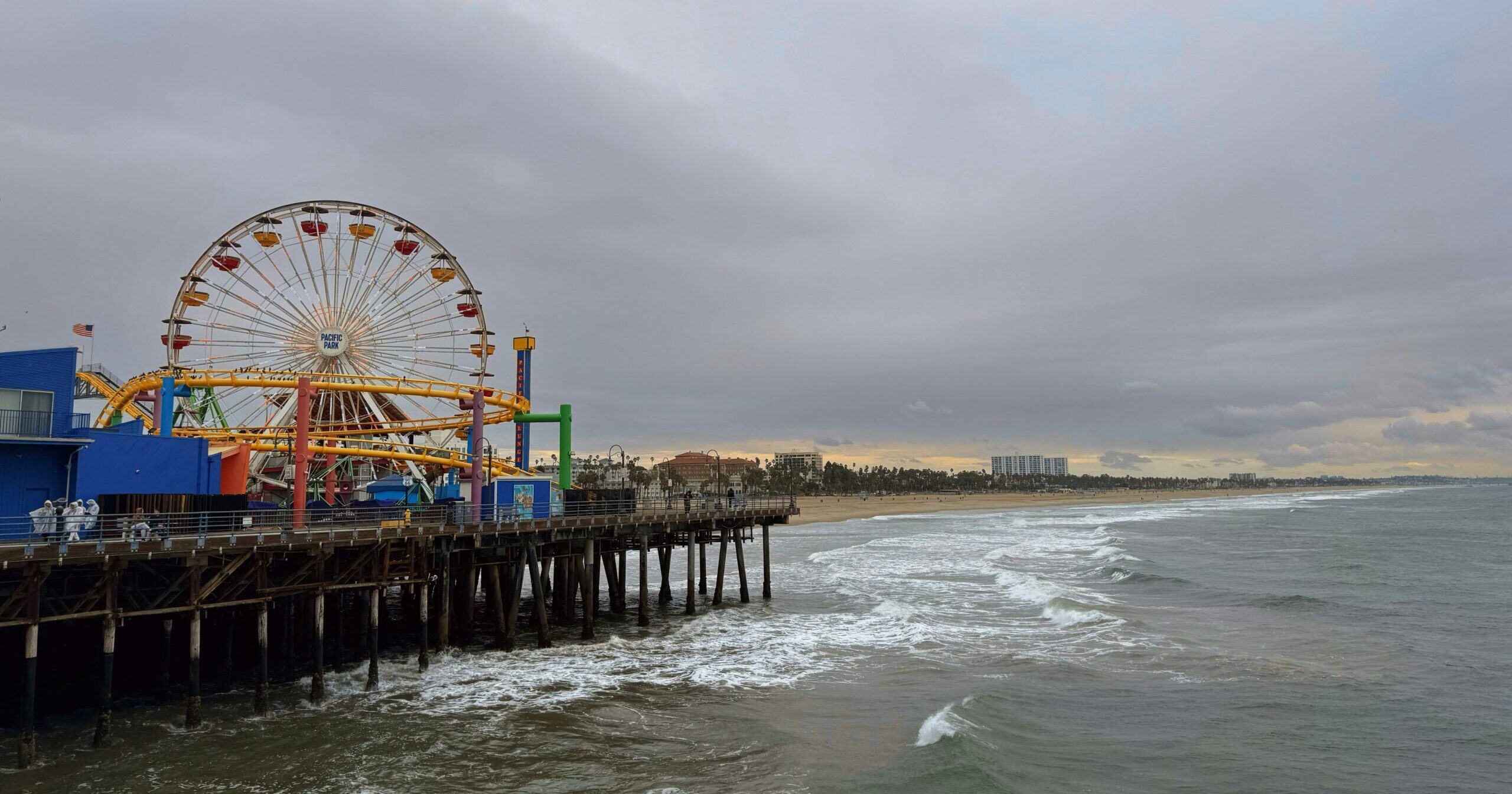

Preparing for the “first flush” – that first big rainfall that kicks off Los Angeles’ rainy season – is always of vital importance for Angelenos. But this year, we also had a late-summer visit from Tropical Storm Marie. Though not strictly considered our first flush (as Marie hit prior to October, the official start of the rainy season), this downgraded hurricane brought between half an inch to an inch of rain to many parts of LA County, with the heights of Bel Air and Angeles National Forest’s Opids Camp seeing 1.56 inches and 1.85 inches, respectively. Even more recently, Tropical Storm Rachel brought massive waves and flooding to communities in Long Beach, Malibu, and Newport Beach.
Paired with the uptick in very-non-Southern-Californian humidity, these recent storms have had many in LA thinking of another weather event to prepare for: a “Super” El Niño.
Every fall, Los Angeles prepares for the launch of our rainy season with the first flush. Though there are smaller storms and showers throughout the year, the first flush is that fall of rain that really gets things going, sweeping away months’ worth of garbage, automotive fluids, dog waste, and other pollutants. All of this grime and litter is then “flushed” down our streets, gutters, and sidewalks through our storm drain system and into our waterways.
El Niño adds further layers of complexity, particularly given the potential for a “Super” iteration of the weather system this fall. El Niño is the warm phase of a climate pattern that occurs throughout the Pacific Ocean, oscillating from “unusually warm” to “unusually cool” (the cool phase is called La Niña) on an irregular basis every few years. Weaker tradewinds lead to higher sea surface temperatures, which in turn can cause major weather phenomena around the world (including an uptick in rainfall along the southern side of the U.S.). Though this weather pattern happens consistently, its intensity can vary wildly. And this year, we might be in for a doozy. (Sources: Pacific Marine Environmental Laboratory’s El Niño Theme Page and Climate.us.)
What Makes This El Niño So Super?
Though many climate scientists do not designate these weather patterns as “Super” – the NOAA categorization scale maxes out at “very strong” – you may have seen this extra adjective being assigned to El Niño year.
As LAist reported in a recent article, an El Niño doesn’t always spell heavy rain for SoCal, and heavy rain doesn’t always lead to disaster. But this winter brings some additional risk factors: exceptionally high King Tides, Kelvin waves, and years of human-caused global warming. Given that El Niño itself heats up the ocean and raises sea levels, this means a high chance of flooding along the coast, as well as near inland waterways that could flood from extra rain. All these factors could come together for a “perfect storm” worthy of a comic book hero: hence, the “Super.”
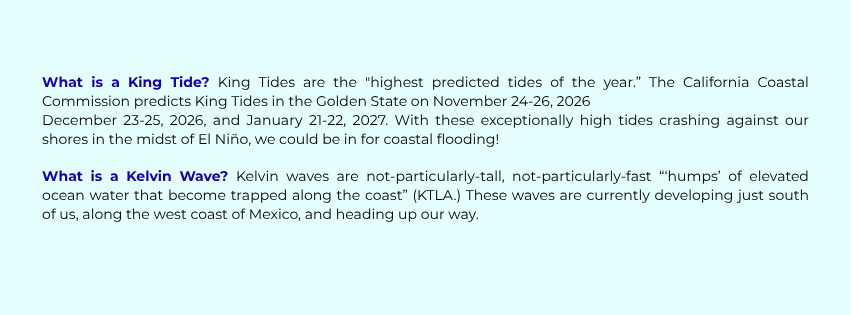
Since the National Weather Service’s Climate Prediction Center predicts “a greater than 90% chance of a very strong event” in our hemisphere this winter, it’s wise to be prepared. As LAist also noted, LA County’s Office of Emergency Management has been hard at work assessing potential “gaps and response actions” in case of flooding, mudslides, and other disasters, particularly in areas affected by last year’s Eaton and Palisades Fires.
A first flush during El Niño means that there’s the potential for a particularly heavy first rainfall, making it extra important to keep our driveways, streets, sidewalks, and storm drains clean this fall. The first flush is also an important time for our stormwater scientists; as we covered in our 2023 interview with LASAN’s Watershed Protection Program Storm Coordinator Clifford Shum, scientists flock to testing sites during and following the first flush to obtain samples of pollutants in various locations throughout the city.
Though polluted waters may feel less immediately dire than flooding and mudslides, the cumulative effects are profound. Minimizing the amount of toxins in our waterways by tending to our stormwater system is one way we can work toward a greener future. Water works cyclically, and every piece of that cycle is connected!
Curious to learn more about what El Niño means for Los Angeles? This post is the first in a series: read about how you can prepare your home at our blog here [LINK]