


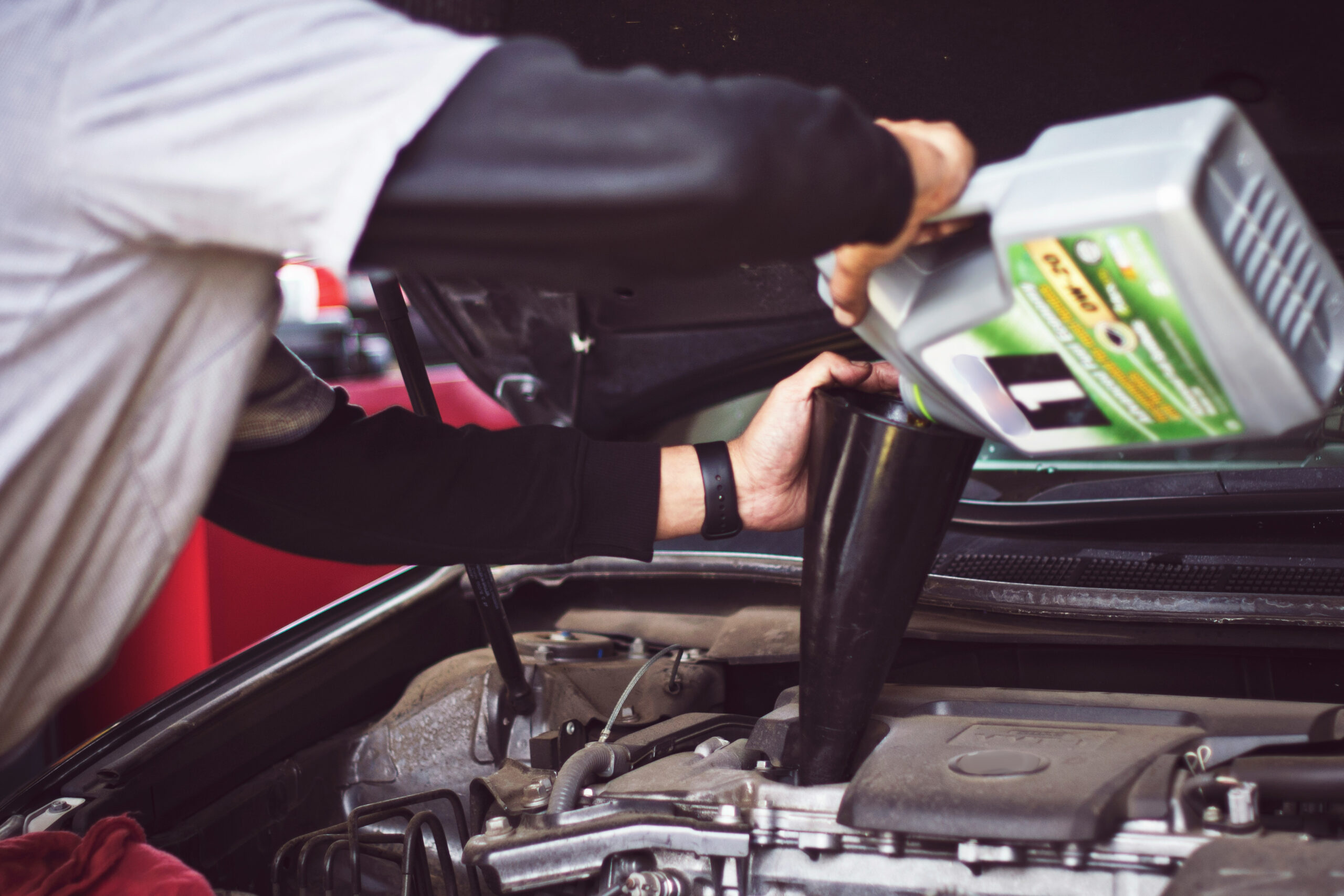

Changing your auto’s oil at home for the first time is something of a rite of passage for every car lover. It’s a hands-on experience that brings you up close and personal with your beloved ride, and a job well done can make you feel confident and empowered. Plus, it’s cheaper and quicker than going to an auto shop or dealership. But with all of these benefits for driver and car alike, there’s still one factor to consider: stormwater.
Used motor oil doesn’t belong in the landfill or down the pipes, but it also doesn’t belong trickling down our driveways and sidewalks. When substances ooze and flow on the streets of LA (or when they get flushed along by the rain), they eventually make their way into our storm drain system. From there, it’s a one-way ticket to LA’s waterways.
Stormwater-smart oil changes have to account for both sides of the coin: making sure that the retired batch of oil gets brought to a center for safe recycling and ensuring that any accidental spills don’t mean trouble for our river, creeks, and ocean. We’ve got a handy guide below to help you every step of the way. It’s do-it-yourself…and do-it-for-your-stormwater!
- Figure out your oil change timeline. Motor oil needs to be changed on a routine basis. But “routine” can mean something different for every make and model – and every driver. To establish what your “routine” is, check your owner’s manual. Every 6-months to a year, or every 5K-10K miles, are fairly standard intervals, but it’s considered wisest to consult your manual’s guidance. (And don’t wait for the “oil change” light to flash on!)
- A note on mileage: Even if you’re not putting that many miles on your car, you still need to change the oil regularly. Oil loses its effectiveness with time, and when it sits around idling, it can lead to a reduced lifespan for your engine.
- Get your tools together. You’ll need a few pieces of equipment on hand:
- A jack or ramp to get underneath your vehicle
- Ratchet and socket (to remove the filter plug)
- Oil pan/catcher, preferably with a lid and pour spot
- Clean plastic container with a lid
- Sealable bag (for old filter)
- Oil filter wrench that corresponds to your particular car’s filter
- Funnel
- Gloves
- Safety goggles
- Cat litter, sawdust, or absorbent pads
- New filter
- New oil
- A note on oil types: There are some biodegradable options that have the potential to be less hazardous for our environment. But this doesn’t mean they can just be poured on in your yard or down the storm drain: all motor oil needs to be disposed of as hazardous waste. (More on that in a moment.)
- Get your engine ready. If you haven’t driven yet today, run your engine for 5 minutes to warm up the oil. Alternatively, if you’re just getting off the road, let your ride cool off for at least half an hour.
- Set yourself up on a level, protected service, far from the storm drains. Make sure you’ve got some distance from the curb, to avoid any accidental splashing or spilling.
- Lay out your absorbent materials. If you’re using absorbent pads, lay them down beneath your car. You can also sprinkle some cat litter or sawdust as a preventative measure.
- Lift your car using the jack or ramp. Once it’s securely heightened, roll yourself on under!
- Get pre-oiled: one guide recommends rubbing clean oil on the new filter’s gasket before you begin
- CAREFULLY drain the old oil into your pan/catcher. This is one of the most important steps for stormwater safety: you’ll want to make sure to catch all of that oil in your pan or catcher. If you spill a little, never fear: that’s what the absorbent material is there for!
- Bag up the old filter and install the new one
- Break out the funnel and fill up your car with the new oil.
- Pour the old oil into your sealable container. Using your funnel, shift the old oil from the catcher/pan into your clean, sealable container. The “clean” part is super important: you don’t want to contaminate the oil with any other substances. Even a small amount of another liquid can render that whole container un-recyclable. (If you do accidentally mix used motor oil with another substance, like gasoline or antifreeze, bring it right to your nearest S.A.F.E. Center.)
- Give the engine a quick run and check the dipstick to see if you need to add a few more drops of oil.
And now it’s time for the most important step: bringing your used oil and filter to a collection site! That way, the oil can be recycled properly and kept out of our waterways. The S.A.F.E. Centers will be happy to help you safely dispose of these forms of hazardous household waste.
Why Safely Dispose?
According to LASAN’s Used Oil Collection program page, a little bit of improperly-discarded used motor oil can have major environmental impacts. As our Used Oil pro colleagues note, one gallon of used motor oil can contaminate a million gallons of drinking water; that’s “a full year’s water supply for 50 people.” When oil slides down your driveway or sidewalk and toward our storm drains, it’s on a beeline straight to our waterways and the ocean.
And oil filters are part of the problem too. Because a used filter can “retain a pint to a quart of residual oil,” sending just one filter to a landfill can pollute up to a quarter of a million gallons of water.
By taking care of your old motor oil the stormwater-safe way, you’re helping keep our city’s water supply safe and drinkable for years to come.